When the Fence Becomes the Fight: How a Simple Structure Turns Into a Legal Liability
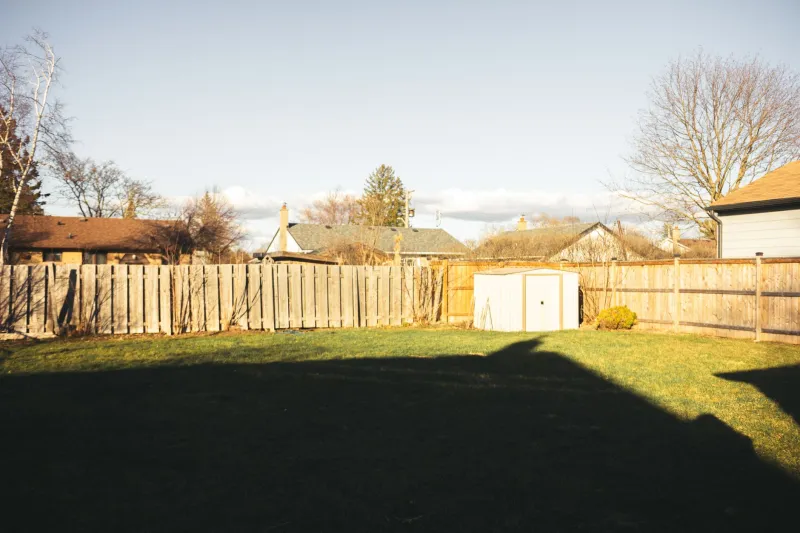
There is a particular irony embedded in the American tradition of fence-building. Homeowners erect these structures to establish clarity — to say, plainly and physically, this is mine and that is yours. Yet across the country, in county courthouses and small-claims rooms alike, the fence itself has become one of the most reliably contentious objects in property law. Not the property line, necessarily, but the fence. Its placement. Its materials. Who paid for it. Who neglected it. And, perhaps most consequentially, how long it has stood exactly where it stands.
Understanding why fences generate so much litigation requires a shift in perspective. A fence is not merely a functional object. In the eyes of the law, it is a statement — and statements, once made in wood, vinyl, or chain-link, have a way of acquiring legal weight over time.
The Placement Problem: Where You Build Is What You Claim
The most common origin of fence-related litigation is deceptively simple: the fence was not built on the actual property line. Surveys are expensive, and many homeowners skip them entirely, relying instead on visual estimates, old stakes, or a neighbor's assurance that "the old fence was always right there." The result is that a significant number of residential fences in the United States sit several inches — or several feet — off the true boundary.
For years, sometimes decades, this discrepancy goes unnoticed. Then one neighbor sells, a new survey is ordered, and the error surfaces. At that point, the conversation shifts from where is the line? to what do we do about the fence that's been in the wrong place? Those are very different questions, and the second one is considerably harder to answer.
In many states, the answer depends in part on how long the fence has been misplaced — which brings the doctrine of adverse possession into the picture.
Adverse Possession and the Fence That Rewrites History
Adverse possession is among the oldest doctrines in American property law, and it remains one of the most misunderstood. In simplified terms, it allows a person who openly, continuously, and exclusively uses a strip of land belonging to someone else — for a statutory period that varies by state, typically ranging from five to twenty-one years — to potentially claim legal title to that land.
Fences are central to many adverse possession claims precisely because they satisfy several of the doctrine's requirements simultaneously. A fence is open and visible. It signals exclusivity. It suggests continuous use. When a homeowner builds a fence six inches over the property line and maintains it for fifteen years, the neighbor's land on the far side of that fence may, under the right circumstances, become legally theirs.
Courts have grappled with this reality in cases across the country. In some jurisdictions, the mere act of treating a misplaced fence as the boundary — mowing up to it, planting against it, making repairs — has been sufficient to support an adverse possession claim. In others, courts have required evidence of a more deliberate intent to claim the disputed strip. The outcomes vary, but the underlying principle is consistent: a fence that has stood long enough in the wrong place can become, in effect, the right place.
This is not a theoretical concern. It is the reason real estate attorneys routinely advise clients to commission a survey before closing on any property where fencing exists near the boundary line.
The Shared Fence Fallacy: Assuming Agreement Where None Exists
Even when a fence is correctly placed on the property line, disputes frequently arise over a question that neighbors rarely discuss at the outset: who owns it?
In many states, a fence built directly on the boundary line is presumed to be jointly owned by both adjoining landowners. This presumption carries significant consequences. Joint ownership typically implies shared responsibility for maintenance and repair costs — an arrangement that works smoothly until one neighbor wants to replace an aging wooden privacy fence with a vinyl alternative, or decides the existing structure no longer serves their needs and wishes to remove it entirely.
These scenarios have generated a surprising volume of litigation. Consider the homeowner who invests $4,000 in replacing a deteriorating shared fence, only to discover that their neighbor disputes both the necessity of the replacement and any obligation to contribute to the cost. Or the reverse situation: a neighbor who unilaterally removes a boundary fence without consent, leaving the adjoining property owner without a structure they had come to rely on for privacy and pet containment.
Several states have enacted "fence viewer" statutes — laws dating back to colonial New England — that establish formal mechanisms for resolving disputes over shared boundary fences, including the apportionment of repair costs. These statutes, where they exist, can provide a clearer path to resolution. Where they do not, neighbors are often left to negotiate, mediate, or litigate.
Material Disputes: When Aesthetics Become Legal Arguments
A less-discussed but increasingly common source of fence conflict involves the material and appearance of the structure itself. Homeowners associations frequently impose restrictions on fence height, material, color, and style, and disputes arising from those restrictions are addressed elsewhere on this site. But even outside HOA-governed communities, neighbors have found themselves in court over fence aesthetics.
In jurisdictions with spite fence statutes — laws that prohibit fences erected primarily to annoy or harm a neighbor rather than serve a legitimate purpose — the question of intent can turn on the fence's design. A structure that is unusually tall, deliberately opaque, or constructed from unconventional materials may invite legal scrutiny if the circumstances suggest it was built to obstruct a neighbor's view or light rather than to mark a boundary or provide security.
The line between a legitimate privacy fence and an actionable spite fence is not always obvious, and courts have reached inconsistent conclusions. What is clear is that the decision to build a fence — its height, its placement, its material — is never purely a matter of personal preference when it shares a boundary with a neighbor.
Practical Guidance: Protecting Yourself Before the First Post Goes In
For homeowners contemplating fence construction, or those who have recently discovered that an existing fence may not sit where they assumed, several steps can significantly reduce legal exposure.
First, commission a professional survey before breaking ground. The cost is modest relative to the potential expense of litigation, and the survey creates a documented record of the boundary's true location.
Second, if a neighbor is involved in or affected by the fence — particularly if the structure will sit on or near the boundary line — consider a written agreement that addresses ownership, maintenance responsibilities, and the process for future modifications. This need not be a complex legal document, but it should be signed and retained by both parties.
Third, review applicable local ordinances and, where relevant, HOA governing documents before finalizing any design decisions. Height restrictions, material requirements, and setback rules vary considerably by municipality.
Finally, if you discover that an existing fence on your property appears to be misplaced, consult a real estate attorney before taking any action — or inaction. The longer a boundary encroachment persists without objection, the more complicated the resolution becomes.
The Deeper Lesson
A fence is a declaration. It says something about where one person's domain ends and another's begins. That declaration, made in physical form and left standing through seasons and ownership transfers, accumulates legal significance in ways that most homeowners never anticipate.
The disputes that arise from fences are rarely about hostility alone. More often, they reflect a failure of communication at the moment of construction — a moment when a conversation, a survey, or a simple written agreement might have prevented years of conflict. The fence, after all, was meant to settle things. The goal, at FenceOff, is to help ensure that it does.