Whose Canopy, Whose Liability? Untangling Tree Ownership at the Property Line
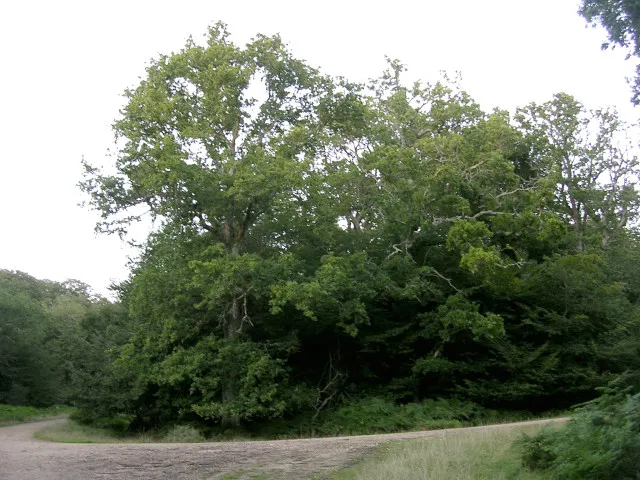
Photo: Jim Champion, CC BY-SA 2.0, via Wikimedia Commons
Trees are patient. They grow across fences, under driveways, and over rooflines long after the survey stakes have disappeared. When a branch drops onto a neighbor's car or a root cracks a sewer lateral, the resulting argument is rarely about horticulture. It is about ownership, notice, and who bears the cost of a problem that took decades to develop. In 2026, boundary-tree conflicts remain among the most common calls to municipal code officers and property lawyers, and they are rarely resolved by a single rule.
The Trunk Is the Starting Point, Not the Whole Story
The foundational principle in most U.S. jurisdictions is that a tree belongs to the owner of the land where its trunk is rooted. If the trunk is entirely on one side of the property line, that owner generally controls the tree, even if its canopy shades the neighbor's yard or its roots extend beneath the neighbor's lawn. Ownership, however, does not automatically resolve every consequence. A tree owner may be responsible for damage caused by a known defective condition, and a neighbor may have limited rights to address encroachments without taking the whole tree.
Boundary trees present a harder case. When a trunk straddles the line, some states treat the tree as jointly owned, requiring cooperation before removal or major pruning. Other jurisdictions allocate responsibility according to where the larger portion of the trunk sits, or by local ordinance. Because these rules vary, the first practical step is to determine the trunk's precise location relative to a licensed survey, not relative to an old fence or a memory of where the line used to be.
When Branches Cross the Line: The Right to Trim
Most states recognize a limited self-help right: a property owner may trim branches and roots that encroach onto their land, up to the property line, without the neighbor's permission. That right is narrower than it sounds. The trimming must be reasonable, must not trespass onto the neighbor's property, and must not unreasonably damage or kill the tree. A homeowner who cuts a major limb from a mature oak because it shades a patio may face liability if the tree becomes unstable or dies. Local tree-preservation ordinances can add another layer, requiring permits for removal or significant pruning of protected species.
The safer course is to put the request in writing before any saw is started. A letter that identifies the encroachment, asks for a specific remedy, and proposes a reasonable deadline creates a record. If the neighbor refuses, the requesting owner may still have the right to trim at the line, but should document the tree's condition with dated photographs and, where damage is likely, an arborist's assessment.
Roots, Sewers, and Liability for Damage
Roots are less visible than branches but often more expensive. A root system that invades a sewer line, lifts a sidewalk, or cracks a foundation can generate thousands of dollars in repair costs. Courts generally ask whether the tree owner knew or should have known of the problem and failed to act reasonably. A healthy tree that sends roots into a failed, aging pipe may not create liability on its own; a tree with a known history of sewer intrusion may. Insurance coverage can also be uncertain, because many policies exclude damage caused by roots or classify it as a maintenance issue.
When roots are the issue, an arborist and a licensed plumber or contractor should document the intrusion, the condition of the pipe, and the likely cause. Repair estimates and before-and-after photographs are more persuasive than a neighbor's recollection. In some states, a property owner may cut invading roots at the line, subject to the same limitations that apply to branches: no trespass, no unreasonable harm to the tree, and no violation of local ordinances.
Documentation Before Escalation
Tree disputes reward early documentation. A complete file should include the deed and any plat map, a current survey showing the trunk's location, dated photographs from multiple angles, records of prior complaints or repairs, arborist reports, and a log of conversations with dates and outcomes. If a neighbor has agreed to share costs or allow access, that agreement should be in writing, even if it is short. If the tree is a boundary tree, both owners should keep records of maintenance and any communications about removal.
State Variations and Local Ordinances
No uniform national rule governs boundary trees. Some states impose statutory penalties for wrongful cutting, including multiple damages in certain cases. Others defer to local ordinances that protect heritage trees or require permits before removal. A few jurisdictions treat boundary trees as common property, while others apply a trunk-location rule. Homeowners should not rely on a rule remembered from another state or a social-media thread. The applicable law is a combination of state court decisions, state statutes, and municipal code.
A Practical Resolution Path
The least expensive path usually begins with a calm, specific conversation and a written follow-up. If that fails, mediation can resolve cost-sharing and access issues without litigation. Before filing suit, a homeowner should consult an attorney licensed in the relevant state and confirm whether the dispute is worth the cost. Many tree cases settle once both sides understand the legal baseline and the documentation.
Trees will keep crossing lines. The owners who fare best are those who treat the trunk, the survey, and the paper trail as the real boundary markers.