When Nobody Answers Next Door: The Legal Minefield of Abandoned Properties and Vanishing Neighbors
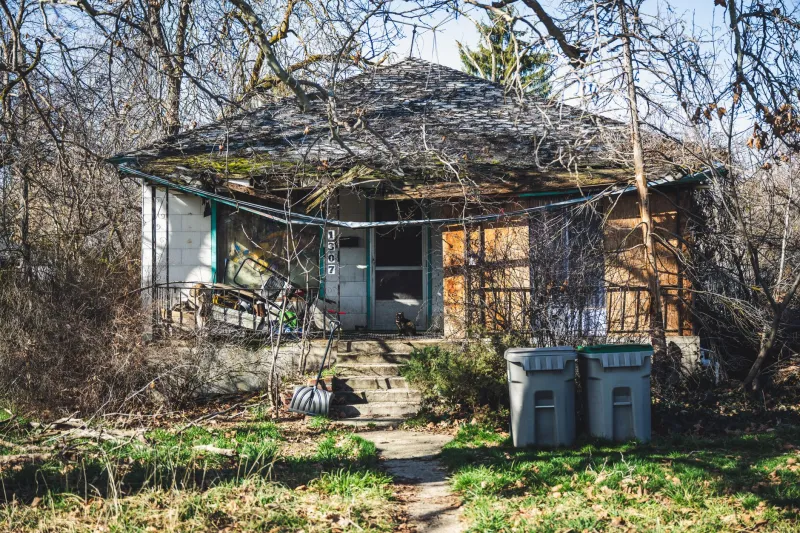
There is a particular kind of unease that settles over a neighborhood when a house goes dark. The lawn grows wild. The mailbox overflows. Paint peels from shutters that no one repairs. Months pass, then years, and no one comes. For adjacent homeowners, what begins as a nuisance slowly transforms into something far more consequential: a legal gray zone where property rights, maintenance obligations, and boundary definitions become dangerously unclear.
Ghost properties — those tied up in unresolved probate, tax delinquency, or simple abandonment — are more common than most Americans realize. The National Association of Realtors has noted that millions of residential parcels nationwide exist in some form of legal limbo at any given time. And while the absent neighbor may seem like someone else's problem, the homeowners living beside these properties often bear the heaviest consequences.
The Silence That Speaks Legally
Abandonment does not suspend property law. It complicates it. When an owner vanishes — whether through death without a clear heir, financial collapse, or deliberate departure — the land itself does not disappear from the legal record. Title remains, encumbrances persist, and boundary lines theoretically hold firm. The difficulty is that theory and practice diverge rapidly when no one is present to enforce those lines.
Consider what happens when an overgrown hedge from an abandoned property slowly pushes across a surveyed boundary. Or when a collapsed fence that once marked a clear division is never replaced, and the adjacent homeowner begins mowing — and effectively maintaining — several feet of their neighbor's land. In isolation, these seem like minor accommodations. Over time, they can constitute the factual foundation for an adverse possession claim.
Adverse possession laws vary by state, but most require a claimant to demonstrate open, continuous, exclusive, and hostile use of another's property for a statutory period — ranging from as few as five years in some states to twenty or more in others. When a property is abandoned and no one objects to encroachment, the "hostile" requirement becomes easier to satisfy, and the clock begins ticking without the absent owner's knowledge.
Real Cases, Real Consequences
The courts have seen this scenario play out with increasing regularity. In one well-documented Ohio case, a homeowner who had maintained a strip of land adjacent to a tax-delinquent property for over a decade successfully petitioned for title to that strip through adverse possession. The original owner — located years later during a title search — had no legal recourse. The maintenance, however informal, had been continuous and uncontested.
In another case out of Georgia, a family discovered during an estate sale that a neighboring property's owner had died intestate twelve years prior. During that period, the decedent's property had been partially absorbed into a boundary dispute with two adjacent homeowners, each of whom had made improvements on land they did not technically own. The resulting litigation took three years and involved multiple competing claims.
These are not outlier situations. They are predictable outcomes of a legal system that requires active stewardship of property rights — stewardship that becomes impossible when one party is absent.
Probate's Particular Complications
Not all ghost properties involve true abandonment. Many are caught in probate proceedings, sometimes for years. When a property owner dies and their estate becomes entangled in contested inheritance, creditor claims, or simply bureaucratic delay, the property can sit unmanaged for extended periods. Courts may appoint administrators, but those administrators rarely have the resources or mandate to actively maintain boundary integrity.
For neighboring homeowners, a property in probate presents a specific challenge: there is technically an owner — the estate — but no individual with clear authority or motivation to respond to boundary concerns. Sending a certified letter to an estate in probate rarely produces a timely response. Attempting to negotiate a fence repair or encroachment correction requires identifying and engaging an executor who may themselves be overwhelmed with competing obligations.
In these circumstances, documentation becomes the adjacent homeowner's most important tool.
Protecting Your Lines When the Neighbor Is Gone
The strategies available to homeowners adjacent to ghost properties are not dramatic, but they are effective when applied consistently.
Commission a current survey. If you have not had your property professionally surveyed recently, a ghost-property situation is exactly the moment to do so. A licensed land surveyor will establish your legal boundary with precision, creating a documented record that predates any future dispute. This survey becomes your evidentiary baseline.
Document the condition of the boundary. Photograph the boundary area regularly and with date-stamped images. Note any encroachments — vegetation, debris, structural elements — that originate from the abandoned property. If conditions change over time, that photographic record demonstrates both the timeline and your awareness of the issue.
Avoid informal maintenance of the neighboring land. This is counterintuitive but legally critical. Mowing, clearing, or improving land that belongs to an absent neighbor — however neighborly it may feel — can contribute to an adverse possession timeline or create ambiguity about where the effective boundary lies. If maintenance is genuinely necessary for safety or sanitation reasons, consult an attorney before proceeding and ensure the activity is documented as temporary and non-possessory.
Research the property's legal status. County recorder and assessor offices maintain public records on tax delinquency, probate filings, and title status. In many jurisdictions, this information is accessible online. Understanding whether the property is in probate, held by a bank, or genuinely ownerless shapes which remedies are available to you.
Contact the appropriate authority. Depending on the situation, local code enforcement, the county assessor, or a probate court may have jurisdiction over an abandoned or estate-held property. Filing a formal complaint about code violations or requesting that a property be placed under receivership are legitimate avenues that create official records and may prompt action.
Consult a real property attorney. If the situation has persisted for more than a year, or if there is any evidence of encroachment on your land, legal counsel is not optional — it is prudent. An attorney can assess the adverse possession risk under your state's specific statutes, advise on formal notice procedures, and help you take protective action before the clock runs out.
The Broader Stakes
Ghost properties are, in many respects, a symptom of broader systemic pressures: aging populations without estate plans, economic distress, municipal budget constraints that limit code enforcement, and property tax systems that can allow delinquency to persist for years before intervention. These are not problems that individual homeowners created, but they are problems that individual homeowners must navigate.
The fundamental principle that animates property rights in the United States is that ownership carries responsibility — responsibility that does not simply evaporate when an owner disappears. But that principle provides cold comfort to the homeowner watching an abandoned structure deteriorate beside their carefully maintained home, uncertain whether their boundary is still where it was when they bought the property.
Knowing your boundaries, in this context, means more than understanding where your land ends. It means actively maintaining the legal integrity of that line, even — and especially — when the person on the other side of it is nowhere to be found.