Losing Ground: How Adverse Possession Laws Are Quietly Transferring American Property — and What You Must Do Now
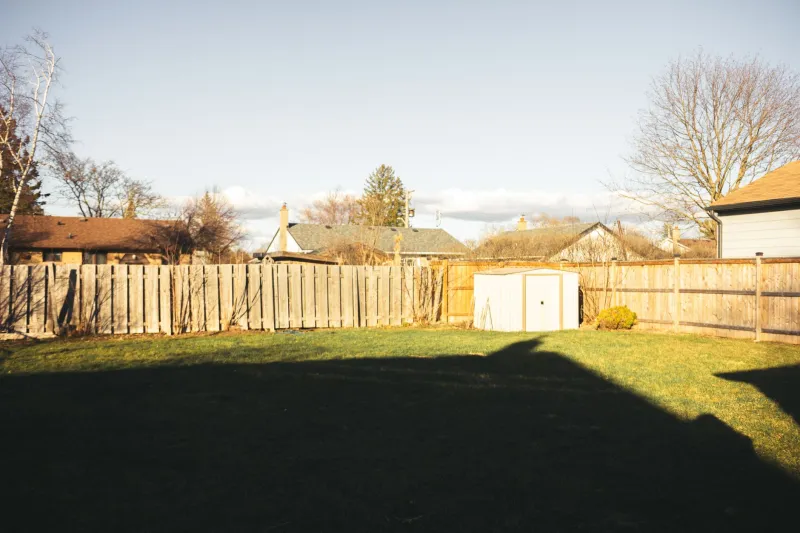
Most Americans assume that owning a piece of land means exactly that — ownership, full stop. The deed is recorded, the mortgage is paid, and the boundary lines are fixed. What few homeowners realize is that a neighbor who mows a strip of your lawn for long enough, parks on the edge of your lot without permission, or builds a garden shed a few feet over your property line could, under the right circumstances, eventually claim legal title to that portion of your land.
This is not a hypothetical. Adverse possession — a doctrine rooted in English common law and embedded in the statutes of all fifty states — grants courts the authority to transfer ownership of real property from a titled owner to a continuous, open, and hostile occupant. And according to property attorneys and county courthouse records across the country, these claims are becoming more common, more contentious, and more consequential.
What Adverse Possession Actually Means
At its core, adverse possession rewards long-term occupancy and penalizes neglect. The law's original rationale was pragmatic: land left unused and unchallenged for extended periods creates ambiguity, discourages productive use, and burdens courts with stale disputes. By establishing a clear timeline after which an occupant's use ripens into ownership, legislatures historically sought to encourage landowners to monitor and defend their boundaries.
To succeed on an adverse possession claim, a claimant typically must demonstrate that their use of the disputed land was:
- Actual — they physically occupied or used the parcel
- Open and notorious — the use was visible and obvious, not concealed
- Exclusive — they weren't sharing use with the general public or the true owner
- Hostile — the use occurred without the owner's permission
- Continuous — the use persisted without significant interruption for the statutory period
Meet all five elements for the required number of years, and a court may award title. The complexity lies in how each state defines and applies these standards.
The State-by-State Patchwork
No two states treat adverse possession identically, and the statutory period — the number of years required for a claim to mature — varies dramatically. In Louisiana, a claimant with a recorded title (even a defective one) may assert ownership after just three years of possession. California sets the bar at five years but requires the claimant to have paid property taxes on the disputed land during that period — a provision that filters out casual encroachers. Texas requires ten years under its standard statute, though shorter periods apply in specific circumstances. States like Maine and Massachusetts historically required twenty years, though recent legislative updates have shortened some of those timelines.
Colorado, Florida, and several other states have added a good-faith requirement in recent years, meaning a claimant must have genuinely believed they had the right to use the land. Other jurisdictions take the opposite view: a claimant who knowingly trespasses may still prevail, provided the other elements are satisfied. This divergence matters enormously when evaluating risk.
Property owners who hold land in multiple states, or who own rural acreage in states with shorter statutes, face a particularly elevated exposure.
When Neighbors Become Claimants
The adverse possession cases generating the most attention today are not those involving squatters on abandoned urban properties — though those remain a concern. The disputes drawing headlines and courtroom hours involve ordinary neighbors: the family next door whose fence was installed two feet over the line in 1998, the adjacent farmer whose cattle have grazed a border strip for fifteen years, or the subdivision resident who landscaped and maintained a buffer zone between properties that technically belongs to the lot next door.
In a widely cited 2019 case in Washington State, a homeowner lost a strip of land approximately twelve feet wide and ninety feet long — more than 1,000 square feet — after a neighbor demonstrated continuous maintenance and exclusive use spanning over a decade. The titled owner had no documentation of objection, no survey confirming the encroachment, and no record of ever having contested the neighbor's activities.
Similar outcomes have occurred in Georgia, Ohio, and New York, where residential boundary disputes have concluded with courts awarding portions of suburban lots to adjoining landowners based on long-standing, unchallenged use. In several cases, the losing party had purchased the property without knowledge of the encroachment — inheriting a legal vulnerability from a prior owner who never addressed it.
Why Claims Are Increasing
Property attorneys point to several converging factors. First, the acceleration of residential real estate transactions during and after the pandemic brought many buyers into properties without thorough due diligence, including updated surveys. Second, the dramatic appreciation of land values has made previously ignored boundary disputes financially worth pursuing. A strip of land that seemed inconsequential when property was worth $150,000 becomes a meaningful asset when valuations double.
Third — and perhaps most consequentially — the proliferation of digital mapping tools, satellite imagery, and accessible property records has made it easier for claimants and their attorneys to document historical occupancy patterns. Photographs, satellite archives, and even social media posts are now routinely introduced as evidence in adverse possession proceedings.
Protecting Yourself Before a Claim Matures
The most effective defense against adverse possession is prevention, and prevention requires action before the statutory clock runs out. The following measures represent the standard of care that property rights advocates recommend.
Commission a current boundary survey. A licensed land surveyor's report establishes a defensible baseline. If encroachments are already present, you need to know about them before they become legally actionable. Many homeowners discover longstanding encroachments only during a survey ordered for an unrelated purpose — a refinance, a home addition permit, or a sale.
Document your ownership and awareness. If you are aware of a neighbor's use of your land and choose to tolerate it temporarily, put that tolerance in writing. A signed license agreement — even an informal letter acknowledged by both parties — converts hostile use into permissive use, which cannot support an adverse possession claim. This single step can neutralize years of otherwise qualifying occupancy.
Post notices and install physical markers. Boundary markers, survey stakes, and properly placed fencing serve a legal function beyond the physical. They provide visible, documented evidence that you have asserted your ownership and put potential claimants on notice. Courts consistently consider the presence or absence of physical demarcation when evaluating the "open and notorious" and "hostile" elements of a claim.
Conduct periodic inspections of your boundary lines. Absentee owners and those with large rural parcels are at greatest risk. Scheduling an annual walk of your property lines — and photographing what you find — creates a contemporaneous record that can prove invaluable if litigation arises years later.
Consult a real estate attorney at the first sign of encroachment. Adverse possession statutes impose hard deadlines. Once the statutory period has run, your legal options narrow considerably. Early intervention — a formal demand letter, a boundary line agreement, or in some cases a quiet title action — can halt the clock before it expires.
The Fence as a Legal Instrument
At FenceOff, we often observe that property owners underestimate the legal weight a fence carries. A properly placed, documented fence does more than mark a line — it asserts ownership, interrupts a potential claimant's exclusive use, and creates a paper trail of boundary awareness. Courts in numerous jurisdictions have treated the construction of a boundary fence as an affirmative act of ownership that defeats adverse possession claims or tolls the statutory period.
Conversely, an improperly placed fence — one installed inside your own boundary line, leaving a strip of your land on the neighbor's side — can inadvertently accelerate a claim. Placement matters, and placement should be guided by survey data, not assumption.
The Bottom Line
Adverse possession is not an obscure legal curiosity. It is an active mechanism through which titled property is transferred in courtrooms across the United States every year. The homeowners who lose are rarely negligent in any dramatic sense — they simply failed to monitor, document, and assert their boundaries with the consistency the law demands.
Knowing where your land ends is not merely a matter of neighborly courtesy. It is a prerequisite for keeping what you own.