Faceless Neighbors: How LLCs, Trusts, and Shell Companies Are Making Boundary Disputes Nearly Impossible to Resolve

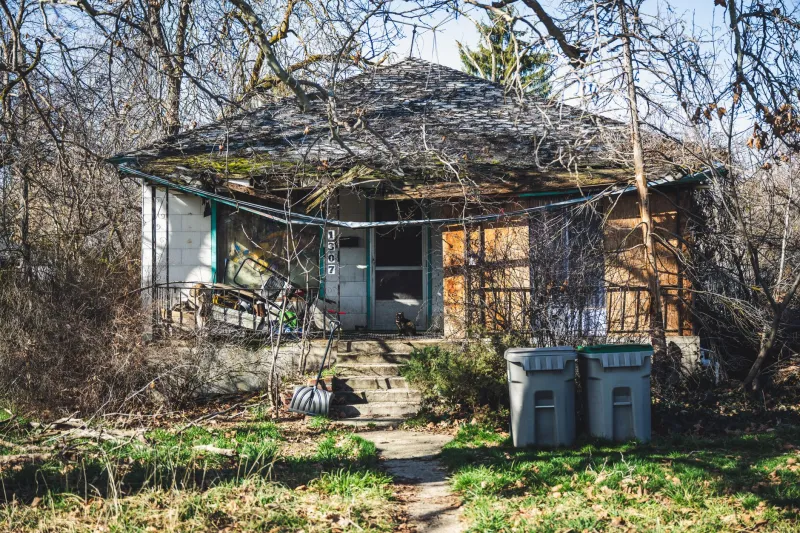
There is a particular kind of frustration reserved for homeowners who discover that the property next door — the one whose overgrown trees are dropping limbs onto their roof, or whose deteriorating fence is inching across the survey line — belongs to no identifiable person. The county tax record lists an LLC. The LLC's registered agent is a law firm in another state. The law firm declines to forward messages. And the fence keeps moving.
This scenario is no longer unusual. Across the United States, residential real estate is being absorbed at an accelerating pace by corporate entities, real estate investment trusts, private equity vehicles, and family trust structures. While these ownership arrangements are entirely legal, they carry a significant side effect for neighbors: the effective disappearance of a responsible human party in any dispute involving shared boundaries, encroachments, or property maintenance.
The Architecture of Invisibility
Understanding why this problem exists requires a brief look at how these ownership structures actually function. A limited liability company, for instance, is a legal entity that can hold property in its own name, shielding its individual members from personal liability. Many states require only minimal public disclosure about who those members are. Delaware, Wyoming, and Nevada — three of the most popular states for LLC formation — have historically permitted what critics call "anonymous" LLCs, where the identities of beneficial owners are not part of any public record.
Trusts present a similar challenge. When a property is held in a revocable living trust or an irrevocable family trust, the trust itself appears as the owner on public records. The trustee's name may or may not be disclosed, and the beneficiaries — the people who actually stand to gain from the property — are typically invisible to anyone outside the trust agreement.
For a homeowner standing at a disputed fence line, these structures create a wall that is far harder to climb than anything made of wood or vinyl.
Why Boundary Disputes Stall When Ownership Is Obscured
Resolution of a boundary dispute almost always depends on communication between two identifiable parties. Whether the matter is handled informally over coffee or formally through a title company, mediator, or court proceeding, someone must be reachable, accountable, and authorized to make decisions about the property.
When the neighboring property is held by a multi-layered corporate structure, that process breaks down at every stage. Certified letters go unclaimed or are routed to registered agents with no authority to negotiate. Phone numbers listed in business filings are disconnected or lead to voicemail boxes that are never cleared. Property managers, when they exist at all, often disclaim any authority over boundary questions and refer callers back to the LLC — which has no public-facing contact.
In the meantime, statutes of limitations on certain property claims continue to run. Encroachments that might have been corrected through a simple conversation become legally entrenched. Structures are built. Vegetation takes hold. And the homeowner who simply wanted to talk to a neighbor finds themselves facing a legal proceeding against an entity that may have been designed, in part, to make such proceedings expensive and slow.
What the Law Allows — and What It Doesn't
The legal tools available to homeowners in this situation are real, though none of them are quick or inexpensive.
Beneficial Ownership Disclosure Rules. The Corporate Transparency Act, which took effect at the federal level in 2024, requires most LLCs and corporations to disclose their beneficial owners to the Financial Crimes Enforcement Network (FinCEN). However, this information is not publicly accessible — it is available only to law enforcement and certain financial institutions. For a private homeowner in a boundary dispute, FinCEN's database offers no direct relief.
State-Level Secretary of State Records. Most states maintain public databases of registered business entities. While these records may not identify the ultimate human owners, they typically list a registered agent and sometimes officers or managers. This is often the first productive step for homeowners attempting to identify a contact point. A registered agent is legally obligated to accept service of process on behalf of the entity — meaning that if litigation becomes necessary, you can reach the company through that channel even if no one answers the phone.
Property Tax Records and Deed Chains. County assessor and recorder offices maintain records of property ownership transfers, tax billing addresses, and sometimes contact information for tax notices. These records are almost universally public. A careful review of the deed chain — who sold to whom, and when — can sometimes reveal the individual or family behind a trust or LLC, particularly in cases where the entity was formed locally.
Litigation and Discovery. If informal efforts fail and the dispute rises to the level of a legal claim, formal litigation opens powerful tools. Through the discovery process, a plaintiff's attorney can compel the production of documents identifying the beneficial owners and decision-makers of an LLC or trust. Depositions can be taken. This is expensive, but it is effective — and the prospect of it sometimes motivates previously unreachable entities to suddenly find a representative willing to negotiate.
Quiet Title Actions. In cases involving long-standing encroachments or adverse possession claims, a quiet title action asks a court to definitively establish ownership of a disputed parcel. These proceedings require proper service on all interested parties, which forces the legal system to grapple with the question of who actually owns the neighboring property. Courts have mechanisms for serving entities whose principals cannot be readily identified.
The Community Dimension
Beyond individual disputes, the proliferation of opaque corporate ownership in residential neighborhoods has broader implications for community cohesion and local governance. HOAs, in particular, are grappling with a new class of member: the entity that never attends meetings, never votes, and never responds to correspondence about covenant violations — including those involving fences, setbacks, and boundary encroachments.
Some HOAs have begun updating their governing documents to require disclosure of a human point of contact when a property is held in trust or by a corporate entity. Others have pursued legal action against LLCs for covenant violations, a process that is theoretically straightforward but practically cumbersome when the entity's principals remain hidden.
At the municipal level, a handful of jurisdictions have introduced ordinances requiring landlords — including corporate landlords — to register a local contact person. These measures are primarily aimed at tenant protection, but they have the secondary effect of making corporate-owned residential properties more accountable to neighbors as well.
Practical Steps for Homeowners
If you are currently dealing with a boundary issue involving a property whose ownership is obscured, consider the following sequence before engaging an attorney:
- Pull the full deed chain from your county recorder's office. Look for the most recent recorded deed and note the grantor, grantee, and any trustee named.
- Search your state's business entity database for the LLC or trust name. Note the registered agent's address and any listed officers.
- Check tax billing records at the county assessor's office. The address to which tax bills are sent is often different from the registered agent and may lead to a more responsive contact.
- Send a formal written notice via certified mail to every address you have identified, clearly stating the nature of your boundary concern and requesting a response within a defined timeframe.
- Document everything. Photographs, survey reports, correspondence logs, and records of unanswered contact attempts will all be relevant if the matter proceeds to litigation or mediation.
- Consult a real estate attorney before taking any physical action — removing an encroachment, building a fence on a disputed line, or otherwise altering the status quo — that could expose you to liability.
Knowing Your Boundaries in an Era of Invisible Ownership
Property rights in the United States have always been grounded in the assumption that ownership carries responsibility — to neighbors, to communities, and to the legal system. The growth of anonymous and semi-anonymous corporate ownership structures is straining that assumption in ways that courts and legislatures are only beginning to address.
For now, the burden falls disproportionately on individual homeowners to navigate a system that was not designed for faceless neighbors. The tools exist. They are simply harder to use, and slower to yield results, than a conversation across a fence line ever should be.
Knowing your boundaries has always meant more than knowing where your property ends. Increasingly, it means knowing how to find the person on the other side — even when they have gone to considerable lengths not to be found.